Biometric Trap: When Your Body Becomes the Leak
| | | |

Biometric Trap: When Your Body Becomes the Leak

Biometric Trap: When Your Body Becomes the Leak What if a threat actor could strap you to a brain scanner and start asking questions? Not to read your thoughts like a movie clichĆ©. But to infer them. Stress patterns. Emotional shifts. Recognition cues. Enough data to expose secrets without you ever speaking. That’s not science…

Biometric Identifiers Executives Can’t Ignore
| | | | | |

Biometric Identifiers Executives Can’t Ignore

Biometric Identifiers Executives Can’t Ignore Executives and high-net-worth individuals already live under constant exposure: financial leaks, digital footprints, and physical security threats. But a new layer is emerging that cuts deeper than devices or passwords: biometric identifiers. Your face, your DNA, your voice. Even your subconscious brain activity. Are now being captured, analyzed, and stored….

The Executive Threat Matrix: How Data Wipes Shift the Risk
| | | | | | | |

The Executive Threat Matrix: How Data Wipes Shift the Risk

The Executive Threat Matrix: How Data Wipes Shift the Risk Executives face ten major categories of threat in 2025. Each carries a different blend of risk — how often it happens — and severity — how damaging it is when it does. The chart below from ObscureIQ’s Executive Threat Matrix makes one truth unmistakable: most…

AR Glasses: A New Threat Surface for High-Value Targets
| | | | |

AR Glasses: A New Threat Surface for High-Value Targets

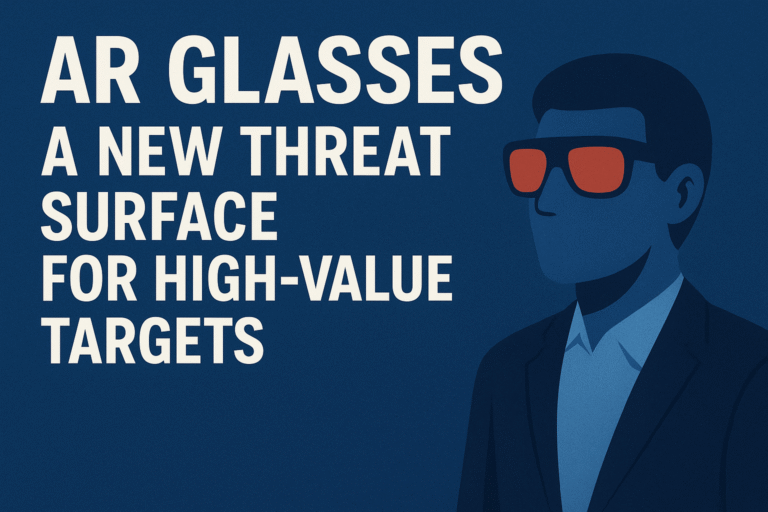
AR Glasses: The Surveillance Tool Disguised as Fashion Augmented reality (AR) glasses are not just eyewear. They’re surveillance tools disguised as fashion accessories. For executives, public figures, and high-value targets, they expand the attack surface in ways few have prepared for. These devices don’t only capture the world around the wearer. They capture you, your…

Sextortion Spam
| | |

Sextortion Spam

Sextortion scams aren’t new, but they remain one of the most effective forms of cyber-enabled fraud. These scams don’t rely on hacking into webcams or stealing compromising videos. Instead, they exploit fear, urgency, and personal data to convince victims that someone has damaging material. In reality, most victims are simply names on a massive spam…