
Stalking & Harassment
When digital proximity becomes psychological control.
Overview
Stalking no longer starts in the physical world.
It starts with data.
Names. Phones. Old addresses. Relatives.
Fragments pulled from brokers, social platforms, breach dumps, and archives.
What looks like noise becomes persistence.
What feels like annoyance becomes intimidation.
What begins online often escalates offline.
This risk sits squarely inside the Executive Threat Matrix ↗
It frequently precedes physical confrontation, extortion, or violence.
Stalking is rarely random.
It is iterative.
And it feeds on access.
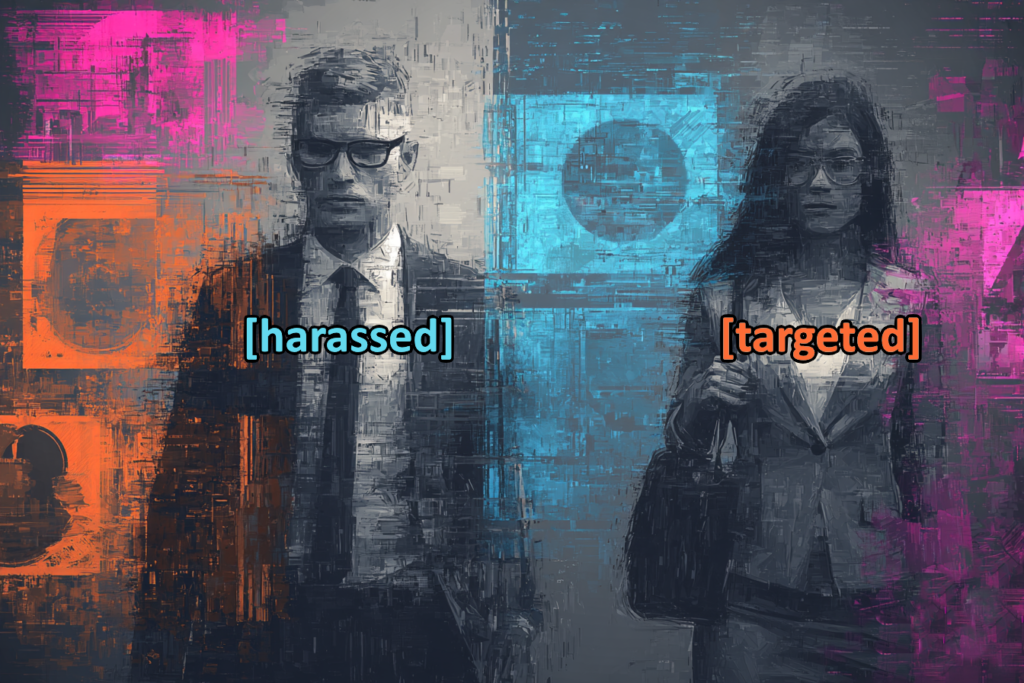
The Digital Trigger Chain
One exposed phone number plus a searchable family tree can unlock months of harassment.
Attackers do not need skill.
They need continuity.
People-search sites provide contact data.
Social platforms provide context and timing.
Breach data provides leverage.
Together, they create a feedback loop.
Digital Data
→
Contact Access
→
Psychological Pressure
→
Escalation
- In multiple 2023–2025 cases, persistent online harassment preceded restraining orders, workplace confrontations, and physical approach attempts within weeks.
- Treat every exposed contact point as a live wire.
Common Data Sources Used by Stalkers
- People-search sites with phone, address, relatives.
- Old voter files and property records.
- Data broker APIs resold to “background check” tools.
- Breach dumps containing emails, passwords, recovery questions.
- Social media comments, likes, and tagged relationships.
- Venmo, GitHub, Strava, Goodreads, and niche platforms.
- AI-powered OSINT tools that automate correlation.
“What used to require obsession now requires a browser.” – OIQ
Risk Assessment
Metric
Rating
Context
⚡
Likelihood
7 / 10 – Medium-High
Especially for executives, founders, journalists, activists, and visible families.
💣
Severity
7 / 10 – Severe
Psychological harm, family stress, reputational risk, and escalation potential.
Risk Reduction Potential
Very High
Rapid data suppression and contact hardening disrupt the attacker’s loop.
Stalking thrives on continuity.
Break continuity and most attackers disengage.
Adversary Profile: Methods and Motives
Who they are
Fixated individuals
Parasocial attachment. Delusion. Entitlement.
Former partners or acquaintances
Personal grievance. Control motive.
Ideological harassers
Political, cultural, or moral targeting.
Workplace or industry rivals
Reputational pressure. Intimidation.
Online mobs
Swarming behavior driven by outrage dynamics.
Extortionists-in-training
Testing leverage before monetization.
Common TTPs
Enumerate phone numbers and emails across brokers.
Contact family members when the principal blocks them.
Rotate accounts to evade platform bans.
Use breached credentials for account takeover attempts.
Send gifts, letters, or “proof of presence.”
Threaten escalation if attention is withheld.
Pivot from online harassment to physical approach.
Capabilities
Automated OSINT tooling.
They use tools to collect and correlate public and leaked data at scale.
AI-generated messages and personas.
They deploy synthetic identities and tailored harassment at volume.
Burner phones and VoIP.
They cycle numbers to avoid blocking and tracing.
Platform abuse knowledge.
They understand reporting gaps, ban evasion, and escalation paths.
Persistence over time.
They exploit the low cost of repeated digital contact.
Indicators, Amplifiers, and Escalation Timeline
Indicators You Are Being Targeted
Repeated contact from new numbers or accounts.
Messages referencing private or old information.
Family members receiving unsolicited contact.
Escalation after blocking.
References to your routines or locations.
Fake reports or complaints filed against you.
“I know where you live” language, even implied.
Risk Amplifiers
Public phone numbers tied to identity.
Family members searchable via broker graphs.
Old addresses still indexed.
Inconsistent username hygiene.
Breach exposure with reused passwords.
Public replies that reward engagement.
Platform algorithms amplifying outrage.
Typical Escalation Timeline
Day 0
Initial discovery via broker or social post.
Day 1–7
Repeated contact attempts. Testing boundaries.
Day 7–30
Family pivot. Platform hopping. Tone shifts.
Day 30+
Threats, impersonation, or physical approach risk.
Early interruption matters.
Scenario Patterns
Each pattern shows how a single contact path—one number, one family trace, one credential—can escalate into stalking and harassment.
The Family Pivot
Blocking the principal didn’t stop the access.
Scenario:
A tech executive blocks an obsessive LinkedIn contact. Within days, the individual contacts the executive’s spouse using data from a people-search site. The messages reference children by name. The tone shifts from admiration to entitlement.
Indicator: Harasser references family members not publicly linked.
Mitigation: Immediate family-focused suppression. Remove relational graphs. Rotate family contact numbers.
The Burner Swarm
Volume replaced identity.
Scenario:
After a public interview, an executive receives dozens of hostile messages from rotating numbers. Each references slightly different personal details, scraped from multiple broker sites. Blocking increases volume.
Indicator: High-volume, low-quality messages with accurate personal details.
Mitigation: Rapid takedown of broker records. Carrier-level filtering. Legal escalation thresholds defined early.
The Breach Recall
Old data became new leverage.
Scenario:
A journalist is harassed with screenshots of old passwords and recovery questions from a 2018 breach. The attacker uses them to imply deeper access.
Indicator: Harasser references historic credentials.
Mitigation: Credential reset sweep. Breach exposure monitoring. Explicitly document and neutralize leaked data.
The Workplace Pressure
Harassment moved sideways.
Scenario:
A founder’s harasser begins emailing board members and investors using scraped professional emails, alleging misconduct. Claims are vague but persistent.
Indicator: Third parties receiving coordinated messages.
Mitigation: Contact surface minimization. Pre-brief stakeholders. Centralize response through counsel.
The Physical Hint
Digital signals precede real-world presence.
Scenario:
After months of messages, a stalker sends a photo of the executive’s building entrance. No threat is stated. The implication is enough.
Indicator: Photos or descriptions of physical locations.
Mitigation: Immediate escalation. Law enforcement engagement. Address suppression and route randomization.
"Each of these scenarios shows how a single exposed contact point can become a stalking campaign." – OIQ
Why Data Wipes Matter Here
Stalking requires access, not brilliance.
Data wipes:
- Remove phone and address lookups.
- Break family graph discovery.
- Increase attacker effort.
- Reduce message success rates.
- Shorten harassment campaigns.
Rapid doxxing takedowns cut off channels before escalation.
“One removed record often collapses the entire loop.” – OIQ

Recommended Counter-Moves
Counter-Move
Description
Implementation Tip
Suppress
Remove phone numbers, emails, addresses, and relatives from broker sites. Prioritize records that expose relationships.
Start with records that show family linkage and multiple contact points. Track every suppression request and verify removals.
Isolate
Separate public-facing contact points from private life. Use aliases and intermediaries.
Create distinct email and phone identities for public roles, assistants, and family. Route high-risk contact through controlled channels.
Harden
Lock down accounts. Rotate credentials. Enable MFA everywhere.
Reset passwords across email, social, banking, and cloud services. Turn on app-based MFA and remove legacy recovery questions.
Educate
Brief family and staff on non-engagement rules.
Define clear instructions: no replies, no arguments, no “just once” responses. Centralize all evidence and responses with a single point of contact.
Monitor
Watch open, deep, and dark web sources for name, phone, and address mentions.
Track mentions of personal identifiers across platforms and dumps. Escalate patterns, not just single hits, to legal and security teams.
Escalate Early
Define legal and law enforcement thresholds before you need them.
Pre-agree on what triggers counsel involvement, police reports, and protective orders. Document every contact to support early escalation.
"You can't negotiate with someone who treats your attention as fuel. You can remove their access." – OIQ
Quick Checklist (First 30 Days)
Run a full digital footprint audit.
Suppress top broker and people-search records.
Rotate phone numbers used for public exposure.
Brief family on contact discipline.
Enable breach and OSINT monitoring.
Document harassment patterns centrally.
Establish response authority and escalation paths.
Stalking is not about curiosity. It is about access plus persistence.
Digital exposure makes persistence cheap. Suppression makes it expensive.
Break the loop early.
We offer elite privacy, suppression, and threat intelligence services for people with everything to lose.