Why VCCs Don't Grant Anonymity. And How to Use Them for Maximum Compartmentalization and Breach Protection
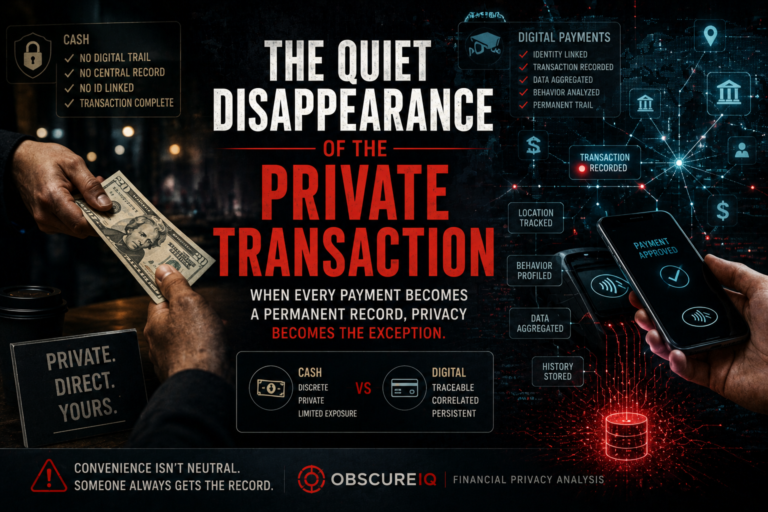
Virtual credit cards (VCCs) protect individuals by limiting exposure of their real payment credentials. They reduce the fallout of merchant breaches and constrain the ability of third parties to build complete behavioral profiles.But VCCs are not anonymous. Not unless they are cash-funded prepaid instruments. All other VCCs remain tied to a verified identity due to KYC/AML rules.
So the goal for individuals is not total invisibility. The goal is compartmentalization. Making each transaction less useful for profiling, fraud, and data aggregation.
This guide shows how to use virtual cards, tokenization, and metadata controls to improve security and reduce surveillance.
TL;DR: What You Actually Need to Know
Virtual credit cards do not make you anonymous. They protect your real card number and help you compartmentalize your transactions. That's the real value. If you want better privacy and fewer risks, use this setup:🟢Everyday Use
Use an Issuer VCC (Capital One Eno, Citi VANs) for:
- subscriptions
- known merchants
- app payments
🟢Unfamiliar or Higher-Risk Merchants
Use Privacy.com or fintech virtual cards for:
- one-offs
- small shops
- anything that makes you pause
🟢Sensitive or Anonymous Purchases
Use cash-funded prepaid cards only. They're the only option that breaks the identity link. Everything else is traceable. Note: Most prepaid cards do not work for subscriptions or recurring billing. They are best suited for one-time purchases.
🟢Maximum Control
Pair your VCC use with:
- a VPN and/or privacy browser
- minimal account creation
- no saving cards to merchant profiles
What Virtual Credit Cards Actually Are
A virtual credit card is an alternative number linked to your real account.- You use it online like a normal card.
- The merchant never sees your true PAN.
If a merchant or data broker obtains your PAN, they can link multiple transactions and build a complete purchase profile. Denying access to your PAN reduces fraud, simplifies remediation after breaches, and makes each transaction more isolated. The core mechanism is straightforward:
- PAN masking
- controlled exposure
- revocable aliases
Why Virtual Cards Matter for Individuals
 VCCs enhance safety and privacy for everyday people by:
- reducing the attack surface for fraud
- limiting what merchants and processors can learn over time
- isolating risky transactions
- preventing merchants from storing or leaking real card numbers
- adding friction to financial surveillance and profiling
The Real Exposure in Modern Payments
Remote payments keep climbing. They made up 23 percent of purchases and peer-to-peer transfers in 2024. Mobile payments jumped too. The average U.S. consumer made 11 phone-based payments each month. The more we shift to digital payments, the bigger the breach surface gets.A virtual card fixes part of that problem. It gives you an alternate number tied to your real account. Merchants never see the true PAN. That blocks fraud escalation. It also keeps your core credentials out of breach dumps and out of data broker pipelines.
A VCC works like a normal card at checkout. The protection comes from never exposing the real number.
One limitation. Any virtual card issued by a bank or fintech still connects to your identity because of KYC and AML rules. So the privacy gain is not anonymity. The gain is isolating your real card from the public transaction surface.
Comparison of Virtual Card Types
The following table gives a clear view of what each VCC type offers:| Virtual Card Type | Anonymity Quotient (AQ) | Financial Recourse & Liability | Control Granularity | Security Mechanism | Compliance Friction (SCA) | Primary Strategic Driver |
|---|---|---|---|---|---|---|
| Issuer VCC (Eno, Citi) | Full KYC Link | Zero-Liability Credit | Merchant Lock, Expiry | PAN Masking Internal VCC | Friction Potential | Customer Retention Security |
| Fintech Apps / Digital Banks (Revolut, Wise) | KYC acct + app separation | Chargeback rights | Disposable, Spend limits | PAN Masking App-issued virtual numbers | Full onboarding KYC | Consumer Flexibility Control |
| Priv-First Platforms (Privacy.com) | Dedicated Identity Layer | Funding-source dependent | Spend/Merchant Lock | PAN Masking Dedicated Service | Contextual Exemptions | Consumer Privacy Control |
| Wallet Tokenization (Apple/Google Pay) | Platform Telemetry / KYC | Network Standard | Transactional Only | Network Tokenization Cryptographic | Biometric SCA | Security Fraud Reduction |
| Prepaid Virtual / Gift Cards (Vanilla eGift, Mastercard Prepaid) | Cash-Based | No Recourse | Fixed Value | PAN Masking Self-Contained | /N/A | Niche Anonymity |
Detailed Provider & Use Case Analysis
| Card Type | Major Providers | Ideal Use Cases | Privacy Score |
|---|---|---|---|
| Issuer VCC Bank-Issued | Capital One Eno Citi VANs American Express, Chase | • Recurring subscriptions • Known merchants • Everyday purchases where you want privacy | Secure but traceable |
| Fintech Apps Digital Banking | Revolut Wise SoFi, Mercury, N26 | • Online retailers • International purchases • Temporary vendors | Good isolation |
| Priv-First Platforms Dedicated Services | Privacy.com IronVest Stripe Issuing | • One-time purchases • Risky or unfamiliar sites • Limit exposure to breach | Strong controls |
| Wallet Tokenization Mobile Payments | Apple Pay Google Pay Samsung Pay | • In-store contactless • Mobile app purchases • Auto-renew on platforms | Convenient but linked |
| Prepaid Cards Anonymous Options | Vanilla eGift Mastercard Prepaid Visa Virtual | • Anonymous purchases • Markets or classifieds • Limited one-off buys | True anonymity |
The Real Anonymity Landscape
 The Anonymity Quotient (AQ) classifies payment tools by how much of your identity they expose during a transaction.
● Low AQ: Payments are fully tied to your identity.
- Issuer virtual credit cards
- Tokenized wallet payments (Apple Pay, Google Pay)
- Fintech virtual cards
- Privacy-first platforms like Privacy.com
- Prepaid virtual and physical gift cards
Prepaid anonymity is increasingly constrained by retail policies and AML requirements. Cash-purchased cards still work, but they are becoming harder to find in some locations.
Why "Privacy" ≠ "Anonymity"
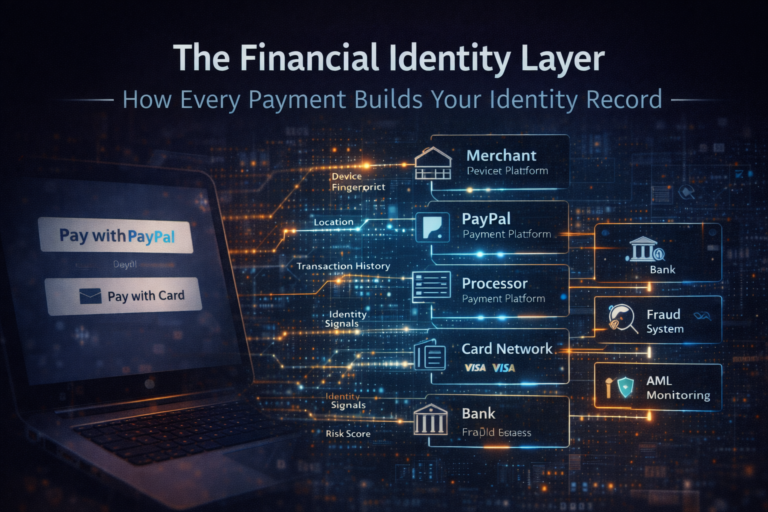
 Research on behavioral tracking shows a hard limit. Even when the PAN is masked, tracking continues across:
- IP addresses
- device identifiers
- timestamps
- merchant category
- purchase amount
- behavioral biometrics
This leads to a simple conclusion:
Virtual cards stop credential exposure. They do not stop behavioral tracking.
The strategic benefit of VCCs is:
- containment
- segmentation
- disposal
- breach resistance
Tokenization vs Virtual Cards
 To build stronger payment privacy, it helps to know what virtual cards protect and what tokenization protects. They are complementary layers, not interchangeable tools.
| Feature | Virtual Cards | Tokenization | Winner |
|---|---|---|---|
| Primary Benefit | Compartmentalization | PAN Protection | |
| How It Works | Alternate, revocable PAN | Replaces PAN with network token | |
| Merchant View | Sees virtual PAN | Sees token only | |
| Consumer Benefit | Risk isolation and segmentation | Strong security with low friction | |
| Limitation | Identity is still linked unless purchased with cash | Identity is still linked |
How Individuals Should Use Virtual Cards

1. Everyday Safety
Use Issuer VCCs or wallet tokenization for:- subscriptions
- repeat merchants
- mobile app purchases
Good for reducing fraud and breach fallout.
2. Online Discretion
Use Privacy.com or fintech VCCs for:- one-off purchases
- merchants you don't fully trust
- creating spend limits
- reducing merchant cross-linkage
3. Sensitive or Anonymous Transactions
Use only cash-funded prepaid cards for:- politically sensitive purchases
- health-related purchases
- anything requiring high anonymity
- avoiding linkage entirely
⚠️ Prepaid Anonymity Limitations
Prepaid anonymity is increasingly constrained by retail policies and AML requirements. Cash-purchased cards still work, but they are becoming harder to find in some locations. Prepaid cards funded with crypto or online purchases are unlikely to offer the same levels of anonymity you get when making a cash purchase.Clean Recommendations for Individuals

➤ Tier 1: Default Setup
Most clients should run: • Issuer VCC for subscriptions and known merchants • Privacy.com for new or uncertain merchants
➤ Tier 2: Higher-Risk Users
Add: • Fintech disposables for high-risk online spending • VPN or privacy browser to reduce metadata correlation
➤ Tier 3: Users Needing Maximum Privacy
Use: • Cash-funded prepaid cards only • Network isolation (VPN, Tor) • Avoid account creation • No recurring billing through these cards
ObscureIQ Insight
Virtual credit cards are a segmentation system, not an anonymity system.- They break the attack chain on financial credentials.
- They constrain what data brokers can reliably map.
- They simplify your digital life by giving you disposable, revocable identifiers.
And behavioral metadata continues to expose patterns.
A strong privacy posture layers:
- virtual cards
- tokenization
- network isolation
- behavioral minimization

Anonymous Payments
Prepaid Gift Card Chart for Private Payments
June 25, 2025
When you want to make online payments without leaving a clear personal trail, prepaid cards can be powerful tools. But…

Anonymous Payments
Getting Your Money When You’re Off the Grid
June 2, 2025
Let’s say you had to run. Maybe you’re a whistleblower. Or maybe you crossed someone powerful. You’re out of the…

Financial Privacy
Privacy Isn’t Dead :: You’re Just Doing It Wrong
November 12, 2025
Three Easy Actions That Actually Protect Your Personal Data Privacy advice can get overwhelming. Most people don’t know where to…