
Skip to content
ObscureIQ Logo
  • Digital Executive ProtectionExpand
    • Exposure Control ProgramExpand
      • What’s Your Hostility Index?FREE SURVEY
      • Footprint AuditRISK ASSESSMENTExpand
        • — ObscureIQ CounterIntel Reports
      • Exposure ControlRISK MITIGATIONExpand
        • — DeepDeletion Tech
        • — Broker Coverage & CODEX
        • — Bespoke Deletes
    • Protection for OrganizationsExpand
      • Human Data Perimeter
      • Enterprise Risk Protection
      • Organizational Assessment
    • Tactical Privacy Training
  • Active Threat MonitoringExpand
    • ThreatWatchEARLY WARNINGExpand
      • — How ThreatWatch Makes You Safer
    • DoxxAlert
    • Event Monitoring
    • Circulating Breaches Directory
  • OIQ IntelligenceExpand
    • Open Source Research ServicesExpand
      • Threat Actor Unmasking
      • Circle of Risk Investigations
      • Vetting & Bespoke KYC
      • Livelsberger/Cybertruck Research
      • DogeQuest
    • Latest Briefings / Search BlogBLOGExpand
      • Featured Briefings
      • Privacy Guides (How To)
      • Tactical Privacy Wire (Newsletter)
    • Executive Threat MatrixExpand
      • Assassination & Targeted Violence
      • Home Invasion
      • Stalking & Harassment
    • Data BrokersExpand
      • The Codex of Commercial Surveillance
      • Domain History Vendors
      • ALPR Data Vendors
      • Brokers & Credit Headers
  • AboutExpand
    • Our ClientsExpand
      • Testimonials
      • Client Privacy
    • Our TeamExpand
      • Privacy + Intel
      • Passionate Advocates
    • ContactExpand
      • Schedule a Call
ObscureIQ Logo

The Financial Identity Layer

  • March 25, 2026
  • PrivacyStan

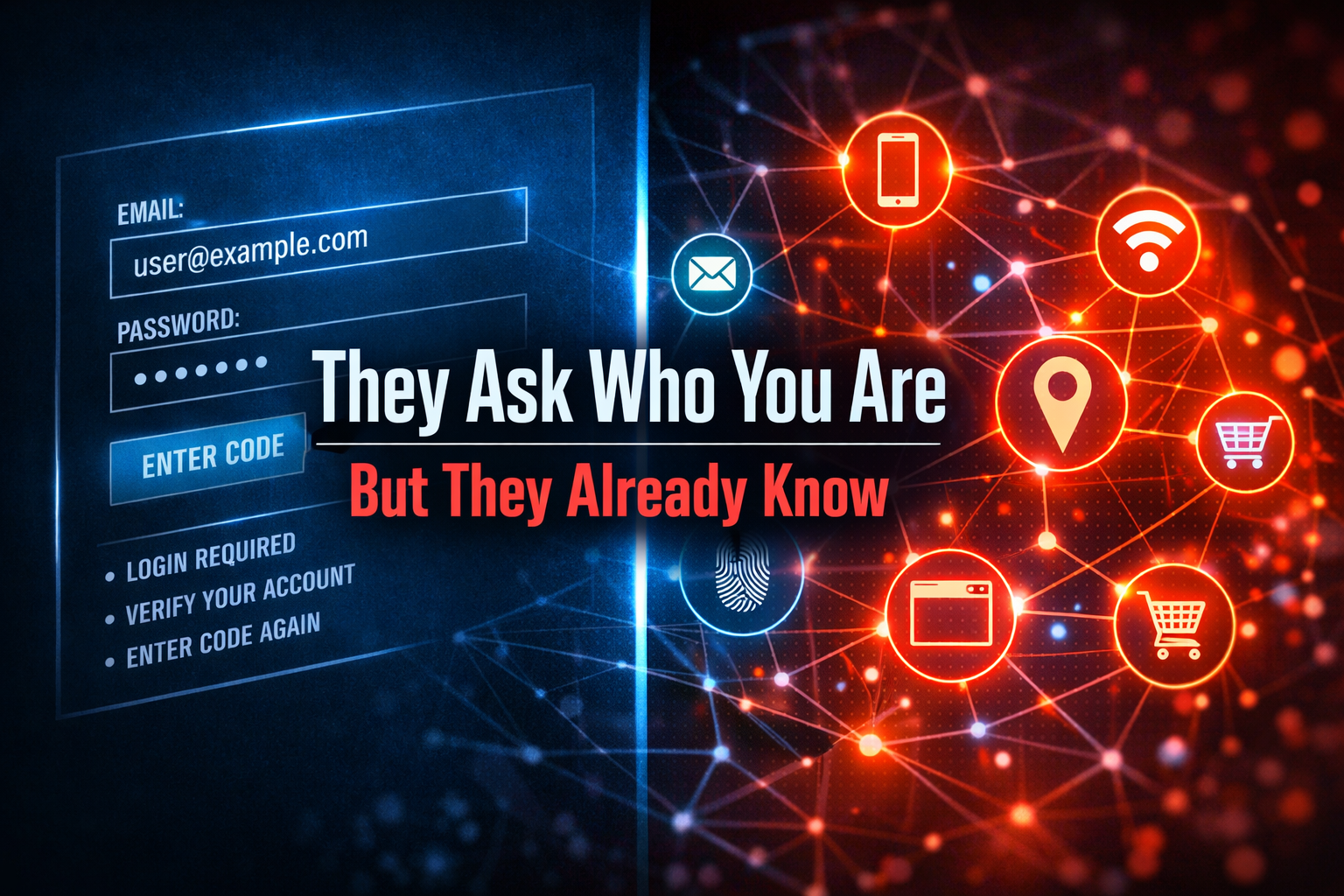
So why does it keep asking who you are?

Have you ever wondered why you have to log in everywhere?
Every site. Every app. Every time.
Email. Password. Verification code.
Again. And again. And again.
It feels broken.
Because it is.

The Contradiction No One Explains

Think about this for a second:

  • The internet can target you with shocking accuracy
  • It predicts what you want before you search
  • It tracks where you go, what you buy, what you read

And yet…

  • It still asks for your email
  • It still makes you create an account
  • It still acts like it has no idea who you are

So which is it?
Do they know you?
Or don’t they?
Why It Feels Like Filling Out the Same Form Forever

It’s like going to the doctor.
You fill out the same forms every visit:

  • Name
  • Address
  • Insurance
  • Medical history

You think: “Don’t you already have this?”
They do. Sort of.
But not in a way that’s unified, portable, or trusted across systems.
The internet works the same way. Just at a much larger scale.

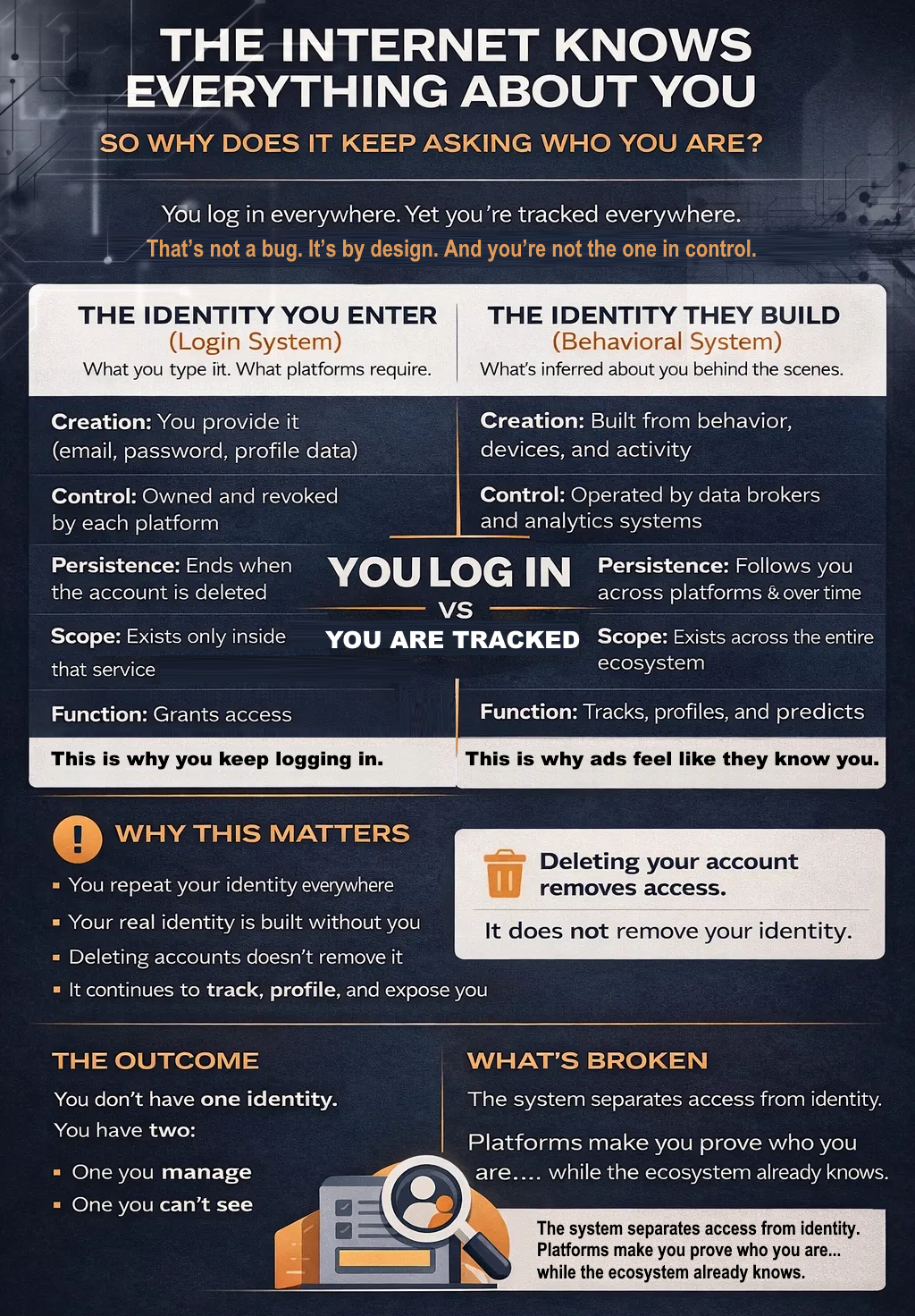
The Real Answer: Two Systems Are Running at Once

The confusion comes from this:
You are dealing with two completely different identity systems.
They do not talk to each other the way you think they do.

System 1: Login Identity (What You See)

System 1: Login Identity (What You See)

This is the part you interact with.

  • Accounts
  • Emails
  • Passwords
  • Logins

Each company creates its own version of “you.”
That’s why you keep re-entering your information.
There is no shared identity layer.
Every platform starts from scratch.
What this system does:

  • Grants access
  • Manages accounts
  • Controls whether you can use the service

If your account is deleted, you disappear from that platform.

System 2: Behavioral Identity (What They See)

System 2: Behavioral Identity (What They See)

This is the part you don’t see.
It is built silently from your activity.

  • Device fingerprinting
  • Location data
  • Browsing behavior
  • Purchase patterns
  • Social connections

This system does not need your login.
It recognizes you anyway.
What this system does:

  • Tracks you
  • Profiles you
  • Predicts you

This is why ads feel so accurate.

So… Do They Know You or Not?

  • Login systems don’t know you well
  • They only know the account you created
  • Behavioral systems know you extremely well
  • But they don’t “authenticate” you in a clean, user-controlled way
  • Constant logins
  • Constant tracking
Constant logins
Constant tracking

Why This System Exists

  • Platforms control access through accounts
  • Data markets build identity through behavior

If these were unified under your control:

  • You wouldn’t need endless logins
  • You could restrict tracking
  • You could actually own your identity

That’s not how it’s designed.

The Real Outcome

Here’s what you actually have today:

  • A fragmented set of accounts you must constantly manage
  • A hidden identity that follows you everywhere

You control the first one.
You don’t control the second.

Why This Matters

This isn’t just annoying UX.
It creates real exposure:

  • Profiling and targeting
  • Persistent tracking across services
  • Data broker aggregation
  • Real-world safety risks

Your identity exists beyond your control.
And it keeps getting rebuilt.

The Bottom Line

The internet doesn’t “know you” in a way that benefits you.
It knows you in a way that benefits everyone else.

Until that changes:
You will keep logging in everywhere.
While being tracked everywhere.
At the same time.
You will keep logging in everywhere.
While being tracked everywhere.
Previous
Share the Post:

Related Posts

Data Brokers

Deep Identity vs. Privacy Settings

March 11, 2026
Why deleting accounts, clearing cookies, and clicking opt-out rarely touch the systems that actually track your identity When I talk…
advertising identity graphsdata aggregationData brokersdevice fingerprintingdevice telemetry
Identity Data

Myth: Deleting Your Data Erases Your Identity

March 10, 2026
Why modern identity infrastructure keeps reconnecting you Most people think privacy works like this: Delete the account Clear the cookies…
behavioral telemetry signalscross domain identity graphscross sector identity linkagedevice fingerprint identitydevice fingerprint tracking
Analysis

KYC Is Procedural. Identity Infrastructure Is Structural

March 4, 2026
Why modern identity risk lives in payment rails, identity graphs, and device telemetry. KYC (Know Your Customer verification) does not…
biometric identity railscompliance enforcement enginescredit bureau identity enrichmentcross domain identity graphscross sector identity linkage

We offer elite privacy and intelligence services for people with everything to lose.

Linkedin
Services
  • Audits
  • Wipes
  • Threats
  • Training
Quick Links
  • About Us
  • Privacy Notice
  • TOS
  • Data Security Statement
Get In Touch
  • 855-763-7273
    (855-76-ERASE)
  • info@obscureiq.com
  • Sitemap

© 2026 All Rights Reserved.

  • Digital Executive Protection
    • Exposure Control Program
      • What’s Your Hostility Index?FREE SURVEY
      • Footprint AuditRISK ASSESSMENT
        • — ObscureIQ CounterIntel Reports
      • Exposure ControlRISK MITIGATION
        • — DeepDeletion Tech
        • — Broker Coverage & CODEX
        • — Bespoke Deletes
    • Protection for Organizations
      • Human Data Perimeter
      • Enterprise Risk Protection
      • Organizational Assessment
    • Tactical Privacy Training
  • Active Threat Monitoring
    • ThreatWatchEARLY WARNING
      • — How ThreatWatch Makes You Safer
    • DoxxAlert
    • Event Monitoring
    • Circulating Breaches Directory
  • OIQ Intelligence
    • Open Source Research Services
      • Threat Actor Unmasking
      • Circle of Risk Investigations
      • Vetting & Bespoke KYC
      • Livelsberger/Cybertruck Research
      • DogeQuest
    • Latest Briefings / Search BlogBLOG
      • Featured Briefings
      • Privacy Guides (How To)
      • Tactical Privacy Wire (Newsletter)
    • Executive Threat Matrix
      • Assassination & Targeted Violence
      • Home Invasion
      • Stalking & Harassment
    • Data Brokers
      • The Codex of Commercial Surveillance
      • Domain History Vendors
      • ALPR Data Vendors
      • Brokers & Credit Headers
  • About
    • Our Clients
      • Testimonials
      • Client Privacy
    • Our Team
      • Privacy + Intel
      • Passionate Advocates
    • Contact
      • Schedule a Call