If You Think a $500 Gift Card Makes You Invisible, You’re 20 Years Behind.
There is a persistent belief that prepaid cards equal anonymity.
Cash in. Plastic out. No trail.
That was closer to true fifteen or twenty years ago.
It is not true today.
But the answer is not a simple no.
It is more precise than that.
The Clean Distinction
There are two categories people confuse:
- Reloadable prepaid accounts
- Fixed-balance open-loop gift cards
They operate under different regulatory treatment.
Reloadable Prepaid Cards
Anonymous? No.
Under FinCEN rules, reloadable prepaid cards are classified as prepaid accounts.
That means KYC requirements apply.
To activate or reload, you must provide:
- Full legal name
- Social Security Number or Tax ID
- Physical address
- Date of birth
In regulatory terms, this is a bank account without checks .
There is no anonymity layer here.
Prepaid Card Anonymity: 2026 Quick Reference
| Card Type | Can Buy with Cash? | Requires ID/SSN? | Online Anon | Best Use Case |
|---|---|---|---|---|
| Store Gift Card (e.g., Amazon, Starbucks) |
Yes | No (under $2k) |
High (if no account linked) |
Maximum privacy for specific retailers. |
| Non-Reloadable Visa/MC (from grocery store) |
Yes | No (under $500*) |
Medium (requires Zip Code registration) |
One-off online purchases or high-risk sites. |
| Reloadable Prepaid (e.g., Netspend, Bluebird) |
No | Yes (KYC Mandatory) |
Low (linked to your identity) |
Budgeting and alternative to a bank account. |
| Virtual Card (e.g., Privacy.com, Revolut) |
No | Yes (linked to bank) |
High (to Merchant) / Zero (to Govt) |
Masking identity from merchants/subscriptions. |
Open-Loop Gift Cards
Fixed-balance Visa or Mastercard gift cards often fall below certain regulatory thresholds.
In many states, you can still buy one with cash without showing ID if:
- The balance is low
- The purchase volume stays below trigger thresholds
That is real.
But it is not full anonymity.
Retail systems now:
- Cap purchase amounts
- Trigger ID scans at higher volumes
- Flag structured purchases across lanes
Briefing: The Threshold Reality
- $2,000 daily load levels change AML treatment
- $10,000 within 24 hours can trigger mandatory reporting
- POS systems detect “lane hopping” behavior
The system is built to detect evasion patterns.
Not just large transactions.
The Real Trap: Pseudo-Anonymity
Even when you buy a gift card with cash, the anonymity is fragile.
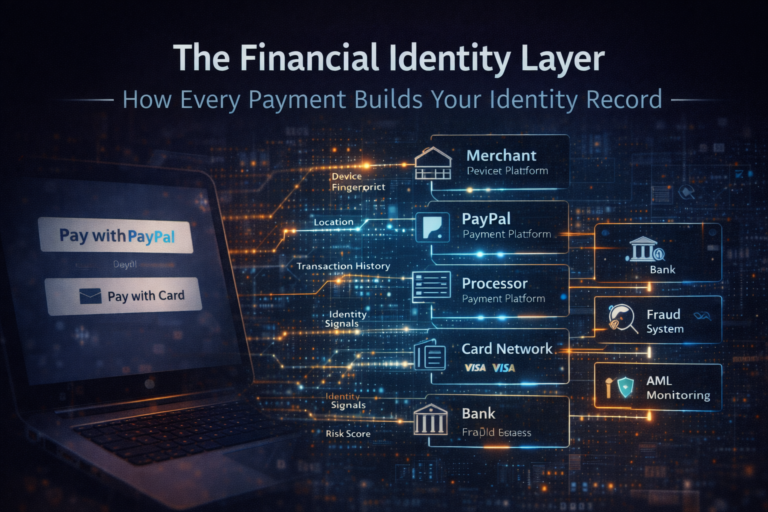
Because the card does not operate in isolation.
Most online transactions require:
- Billing ZIP registration
- Issuer website interaction
The moment you register:
- Your IP address is logged
- Your device fingerprint is captured
That distinction matters.
The Purchase-to-Face Problem
If a card becomes part of an investigation, tracing is procedural:
- The card number is identified.
- Activation timestamp is retrieved.
- Register-level CCTV is pulled.
This technique is called transaction correlation .
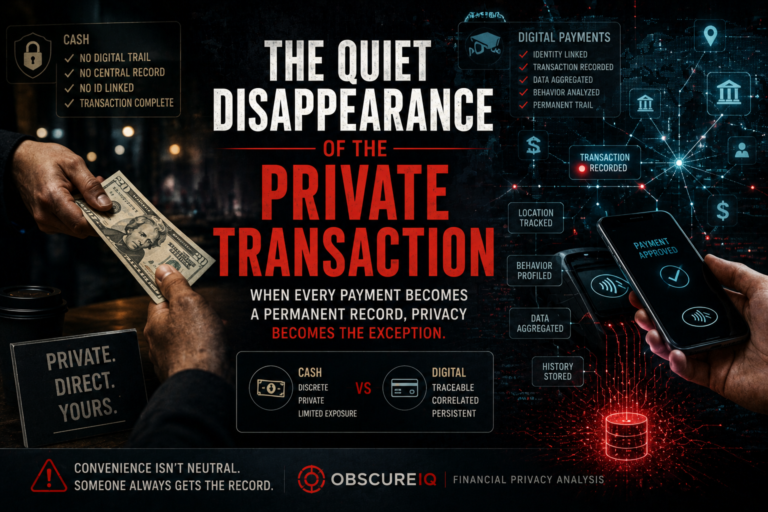
Cash does not erase the camera.
Plastic does not erase metadata.
So What Do Gift Cards Actually Provide?
They provide:
- Reduced exposure to merchant breaches
- A layer of consumer-level transaction privacy
They do not provide:
- Protection from coordinated investigation
- Immunity from digital metadata correlation
That is the honest framing.
Separation from your primary bank account
Protection from issuer identification
The Bigger Shift
Anonymous consumer payment tools are being compressed by:
- EU 6AMLD limits on anonymous transaction thresholds
- Digital identity wallet integration under EIDAS 2.0
- Retail AML automation and POS behavioral flagging
The system is converging toward identity-bound payments.
Not because of conspiracy.
Because compliance architecture demands it.
The Bottom Line
Prepaid cards still have a role.
They are useful for privacy hygiene.
They are weak tools for anonymity.
If your goal is to reduce exposure to fraud or merchant compromise, they help.
If your goal is to disappear inside a financial system, they will not.
Those are two different objectives.
Virtual Card
| Type | Anonymity Quotient (AQ) | Financial Recourse & Liability | Control Granularity | Security Mechanism Primary | Compliance Friction (SCA) | Primary Strategic Driver | SCA Compliance (2026 Standards) |
|---|---|---|---|---|---|---|---|
| Issuer VCC (Eno, Citi) |
Low (Linked to Bank) | Excellent (Zero-Liability Credit) | Basic (Merchant Lock, Expiry) |
High (Masked PAN) | High Friction Potential | Customer Retention/ Security | Low (Full SCA Support) |
| Fintech Apps / Digital Banks (Revolut, Wise) |
Medium (KYC acct w/ app-lvl separation) | Good (Chargebackrights through card net, banks) |
Excellent (Disposable, Spend limits, Insta freeze) |
High (Masked PAN) | Medium Friction (Full onboarding KYC plus in-app auth) | Consumer Flexibility/ Control | Low (General SCA Support) |
| Priv-First Platforms (Privacy.com) |
Medium (Dedicated Identity Layer) | Good (Dependent on funding source) |
Excellent (Spend/Merchant Lock, Pause) |
High (Custom Name) | Medium Friction (Contextual Exemptions) | Consumer Privacy/ Control | Medium (KYC Required) |
| Wallet Tokenization (Apple/Google Pay) |
Low (Plat Telemetry /KYC Link) [but Merchant receives zero PII] |
Excellent (Network Standard) |
N/A (Token is purely transactional) |
Maximum (Tokenized) | Low Friction (Biometric SCA) | Security/ Fraud Reduction | Lowest (Biometric SCA) |
| Prepaid Virtual/ Gift Cards (Vanilla eGift, Mastercard Prepaid) |
Medium (Online) / High (In-Person) | Poor (Limited/No recourse) |
N/A (Fixed Value) |
Medium (AVS Registration) | Low /N/A |
Niche Anonymity | High (Frequent Declines) |