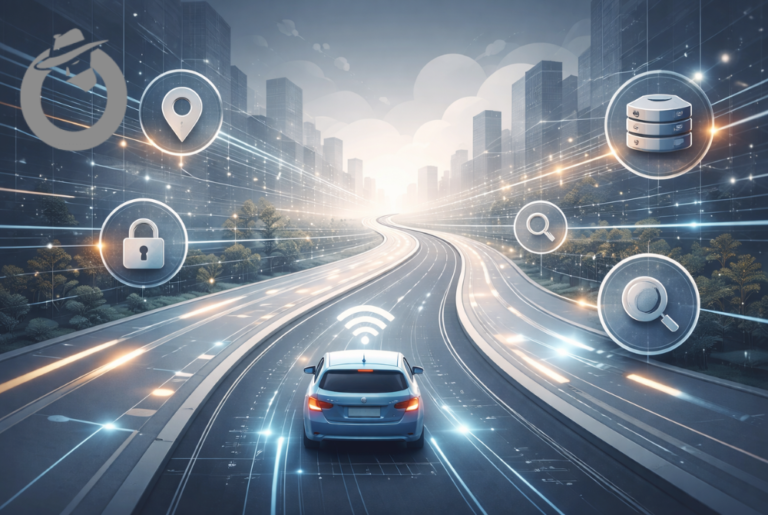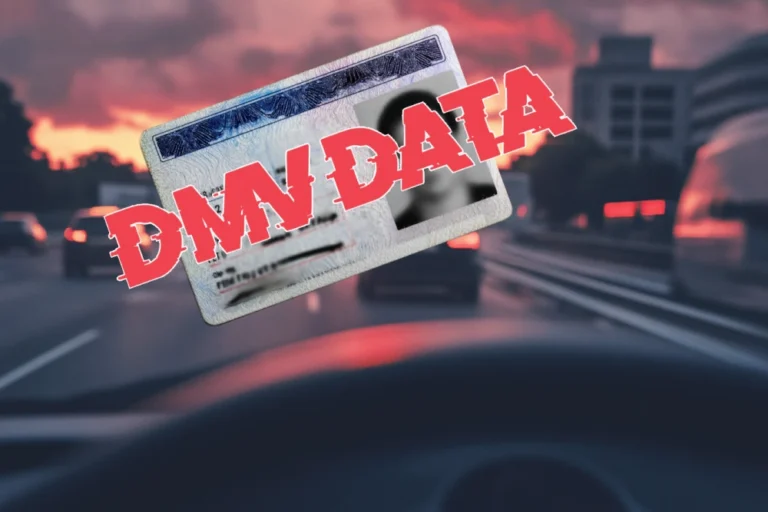
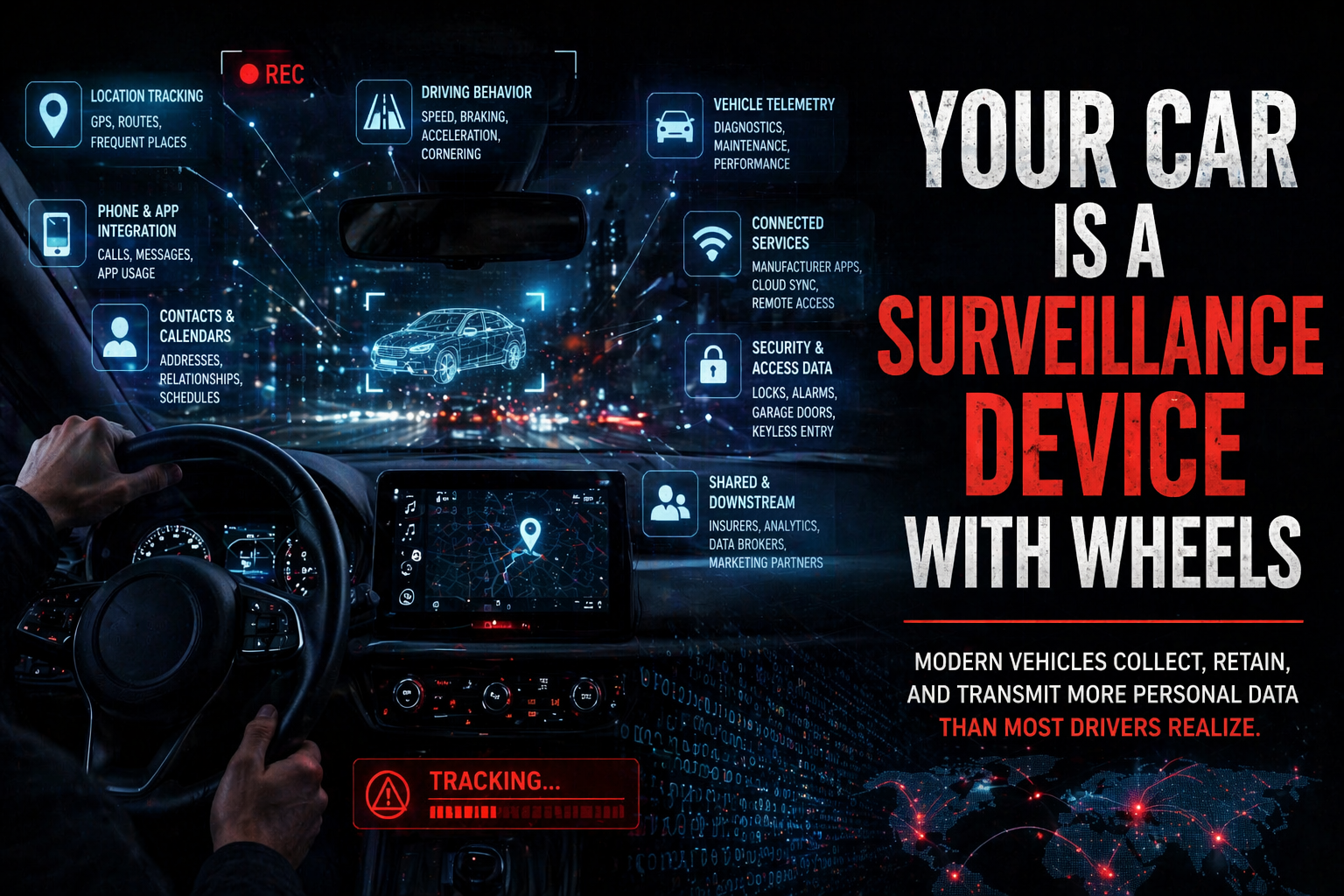
Modern vehicles collect, retain, and transmit more personal data than most drivers realize. The real failure is still transparency.
Most people still think of a car as transportation.
That framing is outdated.
A modern car is also a sensor platform, a behavioral monitor, a location tracker, a mobile account hub, and in many cases a monetizable data source. It is not just getting you from one place to another. It is watching, recording, inferring, transmitting, and sometimes feeding that data into a larger commercial ecosystem that drivers barely understand.
That ecosystem does not stop at the dashboard.
It extends outward to manufacturers, app providers, insurers, analytics vendors, telematics platforms, service providers, data brokers, and other downstream recipients. Some of that data may stay local to the vehicle. Some of it may move far beyond it. Some of it may affect pricing, profiling, marketing, or decision-making long after the driver assumes the interaction ended.
This is why connected car privacy should not be framed as a niche automotive issue.
- It is a surveillance issue
- It is a monetization issue
- It is a downstream broker risk issue
- And it is still badly underdisclosed
Data systems are made to remember data, not to forget it.
Debbie drives into the center of the problem.
Digital systems are built for retention. Deletion is usually an extra step. In connected cars, that step is too often incomplete, inconsistent, buried, or shifted onto the user. The result is predictable. Personal data lingers. It travels. It gets reused. It gets sold. It gets interpreted out of context. It gets attached to people in ways they do not see until some downstream consequence appears.
Cars are different from other connected devices
Connected cars are often lumped into the broader Internet of Things.
That is technically true. But it misses what makes them uniquely dangerous.
Cars have long lifespans. They are sold, traded in, rented, repossessed, repaired, totaled, salvaged, recycled, and reused. They also tend to accumulate highly sensitive information over time. Not just one user’s data, either. Potentially many users’ data across years of use.
That means the privacy problem is not limited to what the car collects while you own it. The problem also includes what remains when you no longer do.
Phones and laptops at least exist in a world where sanitization is an expected part of resale or refurbishment. Cars often do not. That gap alone should concern anyone paying attention to privacy, identity theft, stalking, corporate fleet risk, or the data broker ecosystem.
If a car stores your contact list, device pairings, call history, messages, location history, garage access, saved addresses, route habits, account credentials, or app associations, then ownership transfer should be treated as a data transfer event.
Too often, it is not.
Consumers are not just buying a car. They may be entering a data relationship.
The data is not just sensitive. It is commercially useful.
One reason this problem persists is simple. The data has value.
Not theoretical value. Market value.
Connected vehicle data can feed insurance models, ad targeting, service marketing, predictive maintenance ecosystems, behavioral scoring, location analytics, and other secondary uses. It may help manufacturers and third parties build recurring revenue streams that have little to do with the actual act of driving.
That is what makes vehicle data a monetization story, not just a privacy one.
Drivers are paying for the vehicle itself. Then in virtually every case they are also paying again with their data.
That is a bad bargain, especially when the terms are opaque.
Personal data is something that you are paying with when you buy modern connected cars today.
Merry frames the opaque bargain exactly right.
If the car is partially subsidized by data extraction, consumers should know that in plain language before purchase. If the data is sold, shared, appended, modeled, or used to influence offers and outcomes, that should not be buried under twelve different policy documents and legal abstractions.
A real market, a free market, does not exist without informed buyers and legible terms.
Connected car privacy terms are anything but legible in 2026.
Surveillance without context is dangerous
One of the biggest problems in the connected car ecosystem is not just collection.
It is interpretation.
Cars and related systems can generate streams of data about movement, driving habits, timing, location, proximity events, vehicle state, and user behavior. That data may later be used by insurers, analytics providers, internal scoring systems, or third parties that were never visible to the driver at the moment of collection.
But raw data is not the same thing as truthful context.
A system can register a “near collision” event without understanding why it happened. It can flag harsh braking without understanding road conditions. It can track location patterns without understanding safety needs, work obligations, caregiving, or routine. It can append activity to the wrong account. It can preserve data after ownership changes. It can draw conclusions that are technically generated but functionally wrong.
And still, those outputs may shape pricing, treatment, or profiling.
That is how surveillance systems become harmful even when they present themselves as neutral.
They do not need to understand you accurately to shape outcomes against you.
Downstream broker risk is the part many people still miss
A lot of the public discussion around connected cars focuses on what the vehicle itself can see.
But the deeper issue is what happens next.
Once data exits the car, it moves through a much much larger ecosystem than most consumers realize. This is where downstream broker risk enters the picture.
Even when a driver never directly interacts with a data broker, their information still flows into broker-adjacent environments through telematics vendors, insurers, analytics platforms, marketing partners, app ecosystems, or service relationships. Data can be matched, resold, enriched, and repurposed. It can be bundled with other signals. It can outlive the original context that generated it.
This is where a connected car becomes part of the identity economy.
Risks expand.
- Location trails can expose patterns of life.
- Driving telemetry can shape insurance assumptions.
- Vehicle-linked identifiers can become part of broader commercial profiles.
- App access can expose a person’s movements, timing, routines, and associations.
- Improperly retained data can follow the wrong person after a sale, trade-in, or repossession.
And because these systems are so fragmented, the average consumer often has no realistic way to envision the full chain. To understand the risk.
The types of data that cars collect, manufacturers use – sell – share, third parties collect – sell – share, is truly staggering.
That is not an overstatement. It is a warning.
The local risk is serious, but the remote risk may be even more consequential
There are two distinct privacy problems here.
The first is residual local data, meaning the information that remains in the vehicle when it is sold, traded in, rented, repossessed, or repaired. That includes infotainment history, paired devices, saved destinations, stored contacts, and account remnants.
The second is remote persistence, where app access, connected services, and cloud-linked accounts continue exposing information or control after the driver assumes the relationship has ended.
In some cases, the issue is not just privacy. It is personal safety.
If someone retains or gains app-level access to a vehicle, they may be able to see location-related information, observe movements, or trigger remote actions. That can create serious abuse potential in stalking, harassment, coercive control, repossession conflict, and other threat scenarios.
This is where the conversation around connected vehicles needs to mature.
Too often, people talk about the technology as convenience.
Not enough people talk about it as control.
Transparency is still the easiest fix, and still missing
The most repeated theme in the Debbie Reynolds and Merry Marwig conversation was transparency.
That is not a small point. It is the point.
Transparency, transparency, transparency.
The car industry has normalized a situation where consumers are expected to accept extensive data collection, weak clarity, fragmented disclosures, and limited practical control. Then the industry acts surprised when people become uneasy after learning what their vehicles may actually be doing.
This is backwards.
Meaningful transparency should come first.
- Not after a regulatory complaint
- Not after a media cycle
- Not after a driver’s rate spikes
- Not after a stalking case
- Not after a used car exposes someone else’s data
Transparency should exist at purchase, during use, during transfer, and at end of life. It should be readable. It should be standardized. It should be obvious what data categories are in play, who receives them, how long they persist, and what rights or settings exist.
Instead, the burden is often on the consumer to hunt through overlapping privacy notices, service terms, app terms, telematics terms, third-party terms, and obscure interfaces.
That is not transparency.
That is procedural opacity dressed up as disclosure.
ObscureIQ pushed for privacy labels because this should not be hidden
One part of this debate that deserves more attention is the role of point-of-sale disclosure.
ObscureIQ testified before the IoT Advisory Board process that recommended privacy-related labeling approaches, including vehicle label concepts tied to the Monroney sticker. We supported the idea that buyers should be able to see clear privacy information before purchase, not after the fact. We also recommended that similar privacy labeling concepts be applied more broadly across IoT devices, not just cars.
That idea remains strong.
Consumers already see standardized information on safety, fuel economy, and other key product attributes. Privacy should be no different when the product is designed to collect, infer, retain, transmit, or share personal data.
A privacy label will not solve everything. But it would do something important. It would move the disclosure to the moment that matters. It would make privacy part of the buying decision instead of an afterthought buried in legal text.
And it would force companies to state, more clearly than they often want to, what the device is actually doing.
Consumers are not just buying a car. They are entering a data relationship.
A lot of privacy harm comes from category confusion. The consumer thinks they are buying a product. The company is also enrolling them into an ongoing data relationship.
The product framing lowers suspicion.
The data framing reveals the stakes.
If you buy a car, you expect mechanical performance, safety, reliability, maybe software features. You do not necessarily expect your location, habits, associations, device links, or behavioral signals to be part of an extended commercial pipeline. Yet that is increasingly the territory.
A company can clear the legal bar and still operate in a way that is opaque, one-sided, and hard for consumers to meaningfully resist. That is the real problem here. Drivers are often drawn into an ongoing data relationship without a clear picture of the terms.
The privacy failure here is structural
This is bigger than any one company, any one policy, or any one disturbing example.
The failure is structural.
The connected car market sits at the intersection of persistent identifiers, location intelligence, remote access, opaque disclosures, and steady commercial pressure to extract more value from the vehicle lifecycle. Once you see that full stack, calling the modern car a surveillance device no longer sounds dramatic. It sounds precise.
Cars are not only transportation products anymore.
They are surveillance-capable consumer systems embedded in daily life.
That does not mean all connected features are bad. It does mean the current disclosure and control model is inadequate.
A conversation worth hearing
These themes came through clearly in Debbie Reynolds’ recent interview with Merry Marwig of Privacy4Cars on The Data Diva Talks Privacy podcast. It is a strong discussion and worth hearing in full, especially for anyone working in privacy, automotive, fleet management, insurance, consumer protection, or digital safety.
Debbie raises exactly the right concerns about retention, context, transmission, and transparency. Merry brings real clarity to the lifecycle problem, the scale of collection, the disclosure gap, and the need for better deletion and consumer-facing notice.
If this topic interests you, start with the original conversation and the work behind it.
The bottom line
Your car is not just a vehicle. It is a surveillance device.
For most companies, it is also a monetization device. They are all selling your data.
For downstream actors, it may be a data source. How many of them are keeping your data safe?
For consumers, vehicle data is still a black box.
That needs to change.